Menu

🌐

How sensory marketing, decision science, and modern wine selling can improve perceived experience—without turning hospitality into a trick.
Restaurant operators in 2026 are dealing with a guest who is more time-sensitive, more comparison-driven, and more reactive to small points of friction than in previous cycles. Reviews, short-form content, and price transparency have not only changed how people discover venues; they have changed how quickly they judge the experience while it is happening.
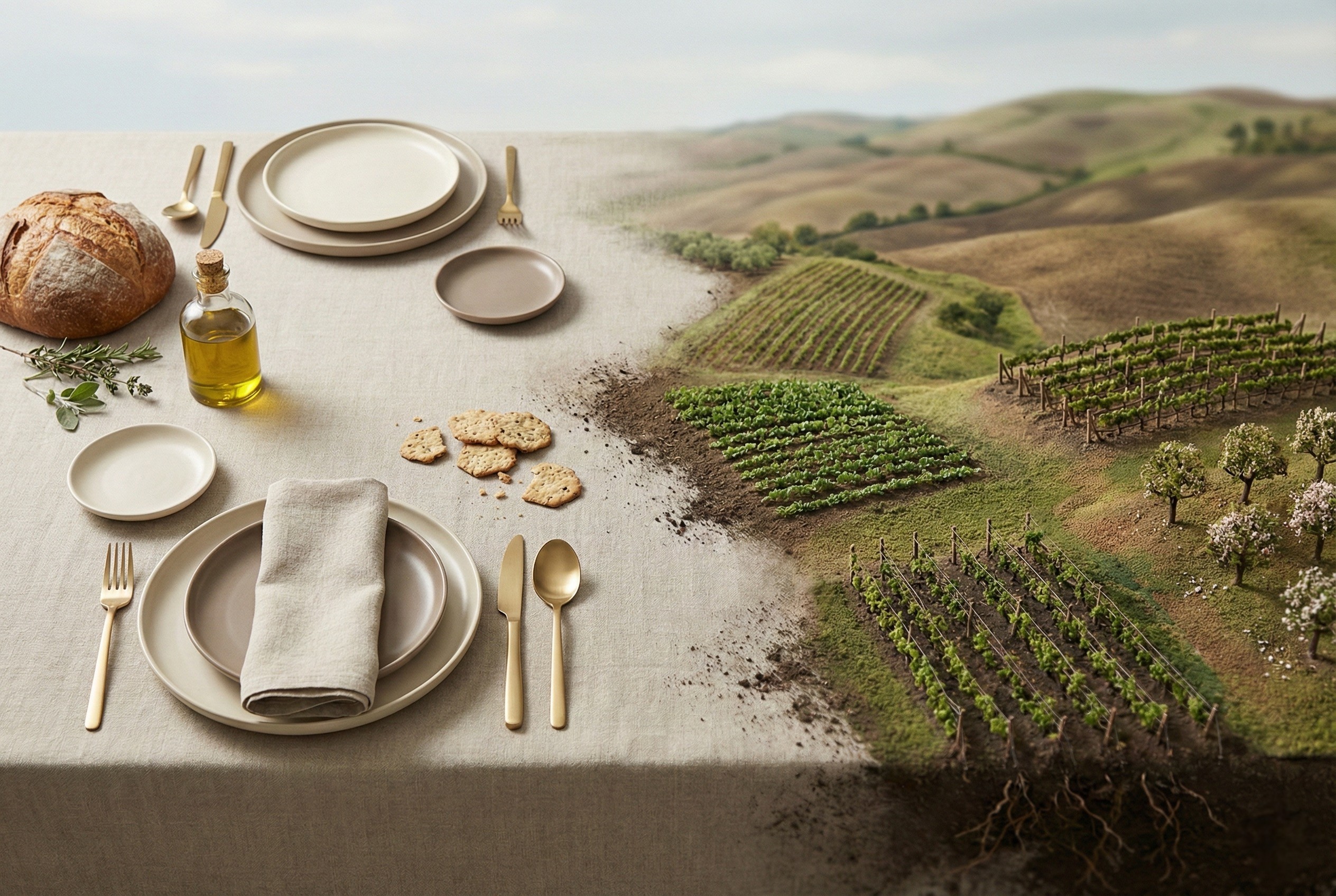
At the same time, the most important parts of hospitality remain stable: guests want clarity, confidence, and a sense that the venue is intentional. This is why “applied neuroscience” in restaurants is best understood as evidence-based experience design. It focuses on how expectations, attention, multisensory cues, and memory shape perceived quality and satisfaction.
A large review in the International Journal of Consumer Studies synthesizes decades of sensory marketing findings and points to a consistent pattern: sensory cues influence evaluation and behavior, and alignment across cues is typically more effective than isolated “tactics.”
The practical question is not how to “influence” guests in a vacuum. It is how to build a guest journey that feels coherent and low-friction from the moment the menu is opened to the moment the experience is recalled later.
In consumer research, expectation is a measurable driver of perceived experience. In restaurant terms, expectation is formed before tasting: through pricing signals, presentation, language, and the credibility of recommendations.
A neuroeconomics experiment reported in PNAS showed that contextual cues (including price cues) can shift reported pleasantness while consuming the same product, consistent with the idea that the brain uses context to interpret sensory input.
The operational takeaway is not to exaggerate claims. It is to ensure that the signals you send are credible and consistent with what you deliver. When framing is clear and believable, the guest spends less effort “checking” whether the choice was correct, and more capacity enjoying the experience.
Menus are commonly treated as printed information. In practice, they function as a decision interface under time pressure, social pressure, and preference uncertainty.
A meta-analysis in the International Journal of Hospitality Management reviewed 53 papers (n = 16,522) and found that menu design shows a large effect on attention/physiological measures, a medium effect on attitudes and intentions, and a smaller but real effect on purchase behavior.
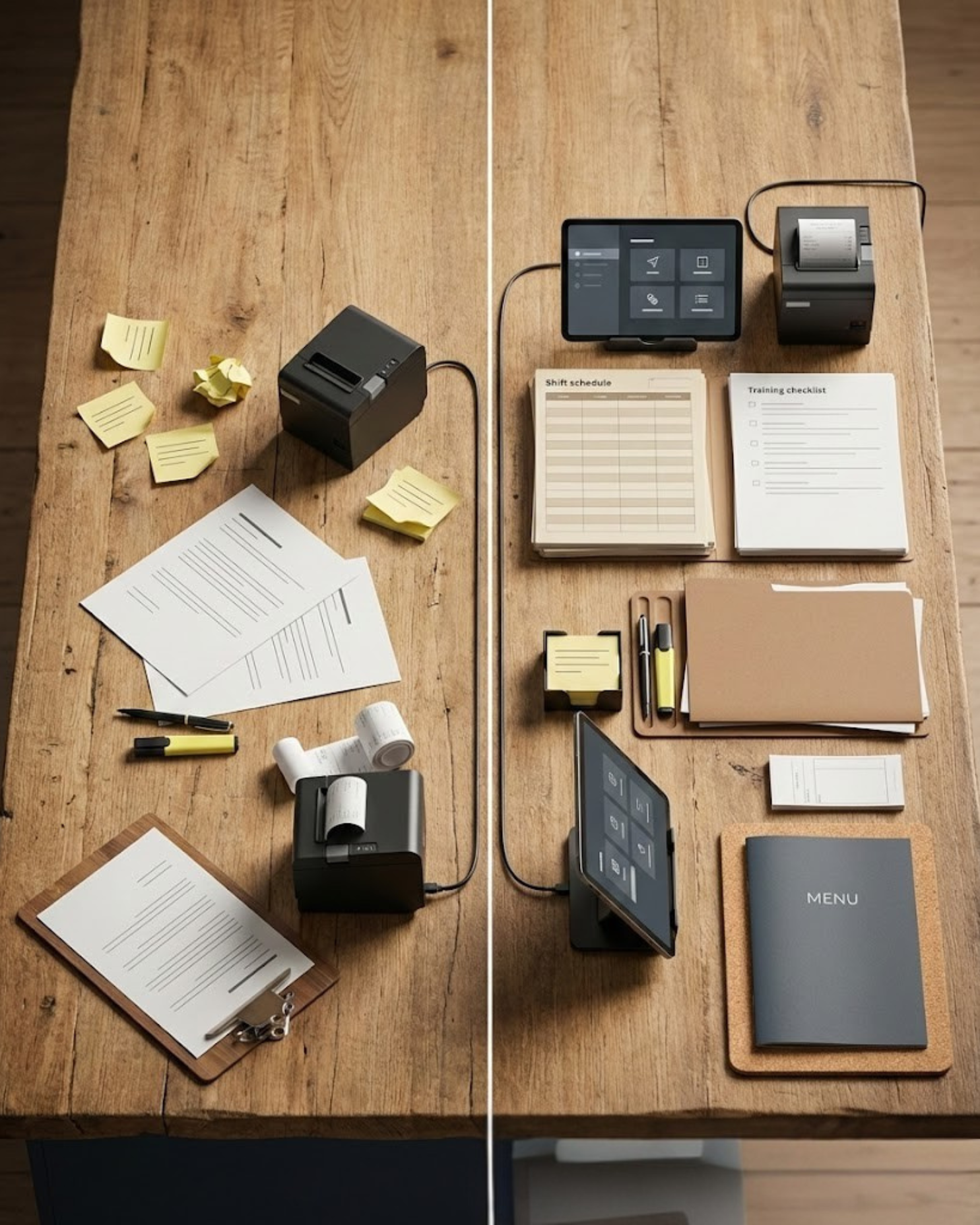
This pattern matters in 2026 because it explains why many menu improvements show up first as “less friction” rather than immediate revenue spikes. Better structure, legibility, and choice clarity reduce decision effort. Reduced effort tends to increase confidence, and confidence is a precondition for recommendations, add-ons, and premium selection.
Choice overload is often oversimplified in popular business writing, but the research is more specific. A meta-analysis in the Journal of Consumer Psychology reported that negative effects of large assortments are more likely when choice sets are complex, tasks are difficult, preferences are uncertain, or decision goals are unclear—conditions that frequently apply in restaurants.
In other words, the issue is rarely “too many items” in the abstract. The issue is uncertainty under cognitive load, especially in categories like wine, desserts, or multi-step experiences.
Guest perception is multisensory by default. People evaluate taste and quality by integrating what they see, hear, and feel in the environment, not only what they taste.
The broad sensory marketing literature emphasizes that multisensory cues can shape judgments and behavior, and that congruence across cues is a recurring principle for improving experience without over-stimulation.
A tutorial review in Attention, Perception, & Psychophysics summarizes evidence that people exhibit reliable crossmodal correspondences—systematic associations across sensory features—which can influence expectations and evaluations.
For restaurants, this is less about adding “effects” and more about avoiding contradictions. When the atmosphere signals one thing and the product delivers another, guests experience subtle friction. When cues align, guests need less interpretation, and the experience feels more natural and effortless.
Music is frequently discussed as a lever for increasing spend, but the evidence is more reliable for pacing and dwell time than for universal revenue gains.
A field experiment published in Behavioral Sciences found that slow-tempo background music increased time spent in the restaurant, while bill amount did not differ across tempo conditions.
This is operationally useful in 2026 because it reframes music as a throughput and rhythm decision. If the format depends on table turns, the environment should support momentum. If the concept is experience-led, the environment should support lingering. The performance metric should match the intent, rather than expecting one playlist to solve every commercial goal.
Guest loyalty is driven by remembered experience, not a perfect average of each minute.
Classic work in Psychological Science shows that retrospective evaluations can be disproportionately influenced by peak moments and by how an experience ends.
For restaurants, the implication is straightforward: the last phase of the meal is not administrative. Payment flow, farewell tone, the final taste, and the feeling of being acknowledged are part of the product. In high-competition environments, a well-managed ending can protect the experience even when earlier moments were imperfect.
In hospitality, storytelling is most effective when it reduces uncertainty and helps guests anticipate what they will feel. It functions as guidance rather than entertainment.
Research in PNAS on natural communication shows that successful storytelling and comprehension are associated with measurable coupling between speaker and listener brain activity, consistent with the idea that narrative can improve shared understanding.
Translated to restaurant service, the value of storytelling is speed and clarity. A short, credible narrative can make a dish or pairing easier to understand, easier to choose, and easier to remember. When that happens, premium recommendations feel less like upselling and more like service doing its job.
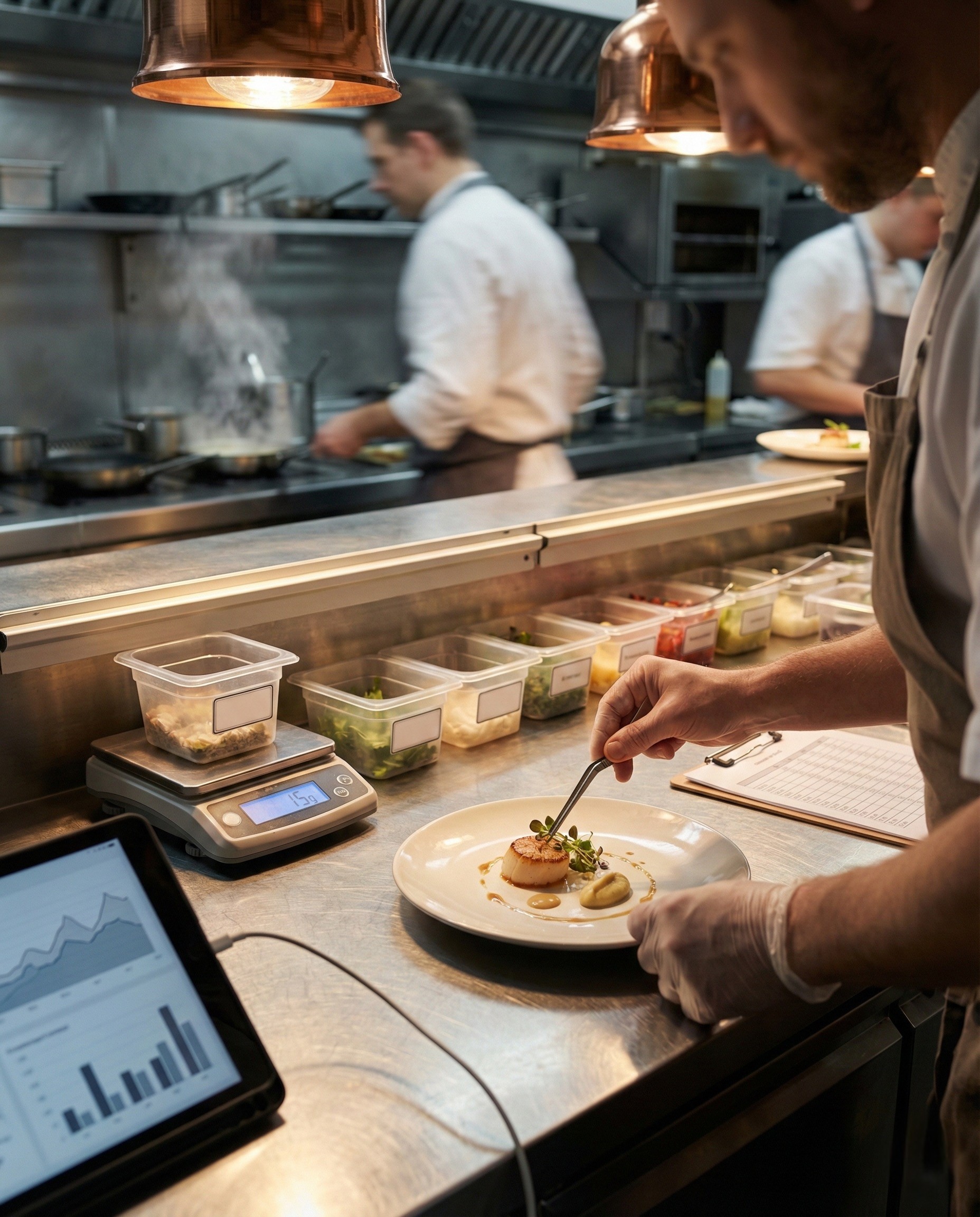
The most competitive venues in 2026 are not those chasing neuromarketing gimmicks. They are those designing a consistent journey: credible expectations, low-friction choice, coherent sensory cues, an intentional pace, and a strong ending.
This approach is commercially relevant because it improves the conditions under which guests accept guidance. When choice feels safe and the environment feels coherent, guests are more open to recommendations and more likely to leave with a clear, positive memory of the visit.