Menu

🌐
How small operational changes can build trust, reduce stress, and stop the constant “hire-and-replace” cycle.
There’s a scene that repeats more often than most owners admit out loud.
It’s a Tuesday night. Service starts well, then it tightens: a couple extra walk-ins, a table with special requests, one wrong ticket, a dish sent back. Someone exhales sharply in the kitchen, someone clenches their jaw in the dining room. At the end of the shift, the owner thinks, “We need to find more people.”
And the team thinks, “I can’t do this for long.”
The point today in hospitality isn’t only hiring. It’s keeping good people long enough to build consistency, quality, and a reputation your business can rely on. And this isn’t just a feeling: in Switzerland, the sector has been dealing with a real shortage—thousands of open roles and widespread recruitment difficulties have been reported.
So yes, the market is tight. But that’s only half the story. The other half is what happens once someone joins: whether the day-to-day experience makes it sustainable for them to stay.
When turnover rises, it’s rarely because “young people don’t want to work” or “no one is serious anymore.” Most of the time, it’s because the operation creates daily friction small, repeated pressures that turn a hard job into an unsustainable one.
And that friction doesn’t always look dramatic. It often looks like schedules that arrive late or change constantly, inconsistent rules (“it depends who’s on shift”), constant pressure because the team is always one person short, stress spilling into communication, and training that’s basically “watch and figure it out.” None of these things explode on day one. But after a few weeks, they become a very real reason to start sending CVs elsewhere.
Because what people value has shifted in measurable ways. In Switzerland, research highlighted that work environment ranks extremely high for workers often even ahead of pay while flexibility has become a major priority for many.
In plain terms: if your venue offers a healthy atmosphere and a minimum level of predictability, you’re already competing better without trying to “win” only with salary.
Locally, the context matters. In Vaud, industry reports have pointed to ongoing pressure in hospitality issues like weaker demand and sales on the restaurant side, alongside staffing difficulties.
This is important because your team experiences a painful contradiction: “We’re asked to do more with fewer people,”while the business itself feels financial pressure and tries to protect costs.
If that phase isn’t managed carefully, two things tend to happen:
It’s a loop but it’s a loop you can break. You just need method.
Predictability doesn’t mean rigidity. It means people can plan their lives.
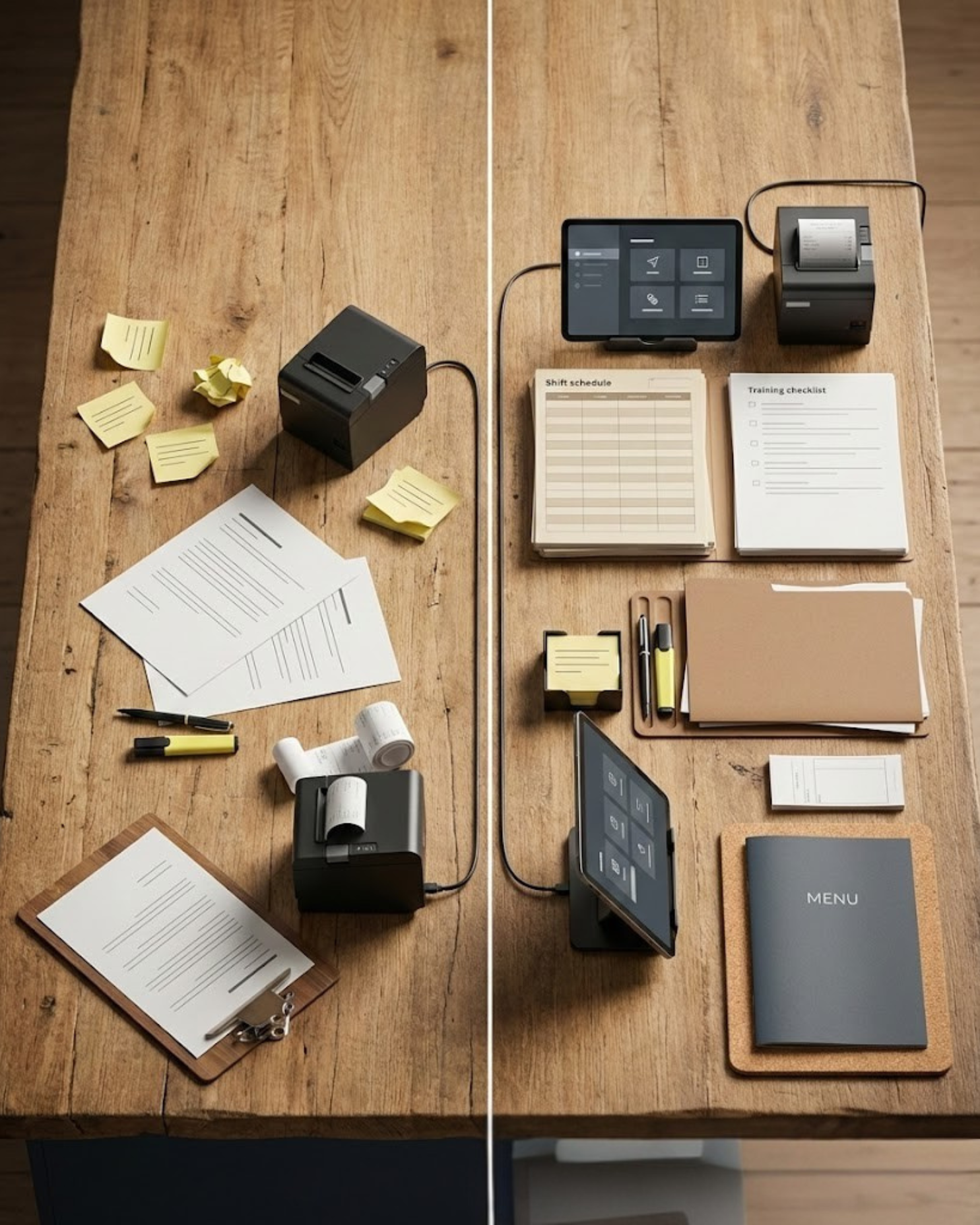
The principle is simple: the earlier you publish the schedule, the more stability you give your team.
A practical, realistic approach is to publish the rota on the same day every week and give as much notice as possible ideally 10–14 days, and more if you can. Changes will happen; hospitality is hospitality. But the goal is to make last-minute changes the exception, not the system. When changes become the norm, people stop being able to plan anything: appointments, family time, sleep, even recovery. That’s when “this job is too much” becomes a rational conclusion.
There’s one more detail that separates “a schedule” from “a retention tool”: distribute the good and bad shifts fairly. If the same person always gets the late finishes, the split shifts, the hardest sections, or the weekend blocks, resentment builds quietly. Even if they don’t complain, it accumulates. Instead, treat fairness as an investment. Spread privileges and burdens as evenly as you can across the whole team. Fairness isn’t softness it’s management.
People don’t leave only because the job is hard. They leave because the job is hard and unpredictable. This is why clear Standard Operating Procedures (SOPs) can do more for retention than most owners expect. They’re not about bureaucracy or control they’re about removing uncertainty. When the basics are clear, new hires feel competent faster, experienced staff waste less energy negotiating “how we do things here,” and small misunderstandings stop turning into conflicts during rush hours. The team spends less time guessing and correcting and more time executing calmly especially when you’re short-staffed.
The key is to keep SOPs short, practical, and actually used ideally a single page each, written for real service, not a binder that sits on a shelf. Start with the procedures that reduce friction immediately:
When these essentials are standardized and trained, you create a kind of operational “quiet.” Staff feel safer because expectations are clear, service becomes more consistent, and the business stops relying on heroic effort to survive busy nights.
In 2026, keeping staff isn’t about finding “better people.” It’s about building an operation that good people can stay in—because they can plan their lives, and because work feels stable instead of chaotic.