Menu

🌐
A practical look at when QR ordering improves the guest journey and when it doesn’t.
Restaurants don’t lose guests only because of price or quality. Very often, they lose them on something more basic: time.
In 2026, people arrive with tighter schedules, shorter breaks, and less patience for friction waiting to order, waiting to pay, waiting for someone to catch your eye. At the same time, hospitality is still built on human contact, guidance, and a sense of being welcomed. That’s why QR ordering creates such a polarized debate: for some, it’s a practical upgrade; for others, it feels like the start of a colder, more automated experience.
The real question isn’t whether QR ordering is “good” or “bad.” It’s whether it fits the moment. In the right context it can remove friction and improve the guest journey. In the wrong context it can dilute what makes the place special.
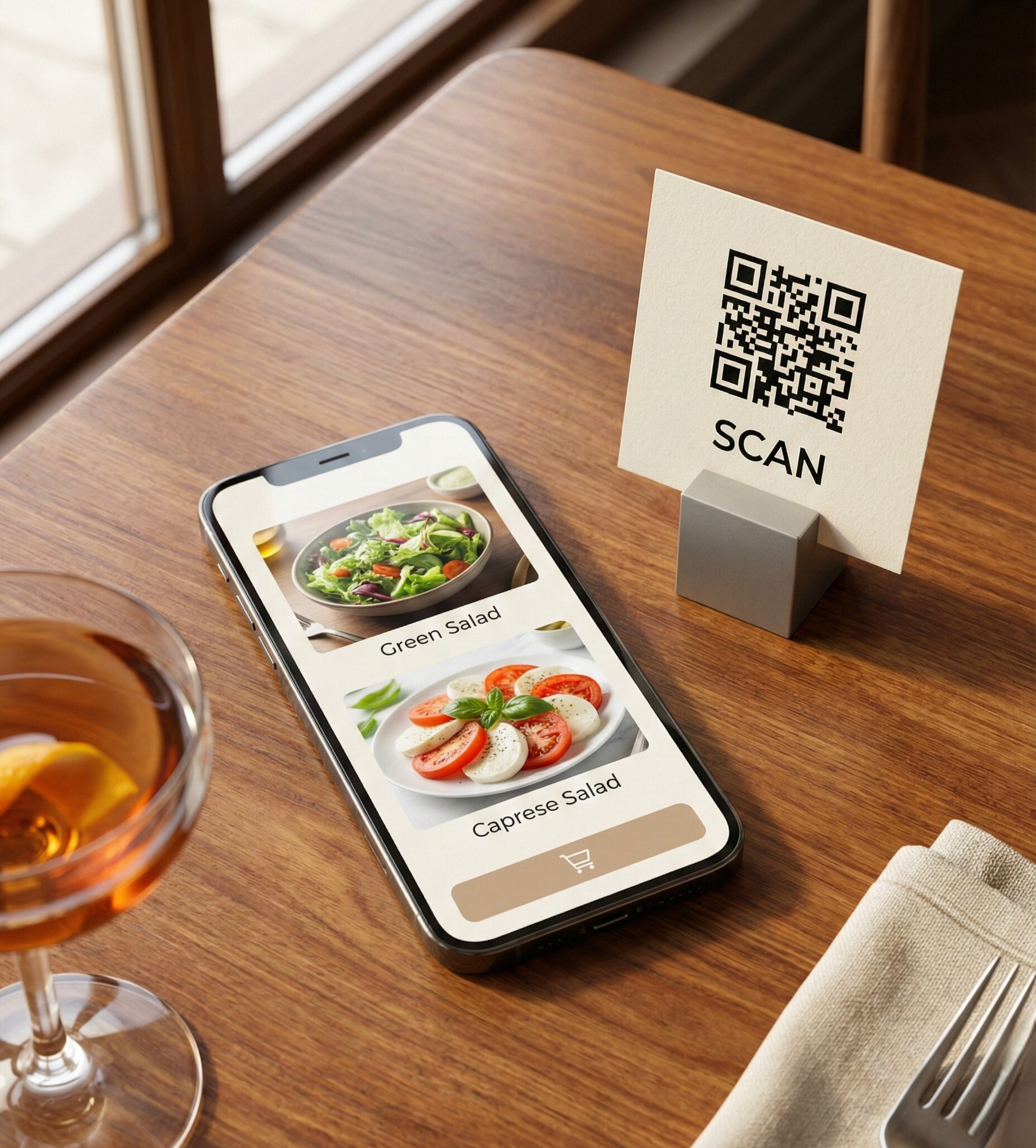
For many small and mid-sized venues, the most expensive minutes of the day are the minutes where the room is full but service flow is stuck—waiting to order, waiting to pay, waiting to close tables. QR ordering (especially with pay-ahead) changes one specific thing: it reduces transaction time at the table and shifts staff energy from “processing” to “serving.”
That’s why it can feel like a win-win. Guests get reliability arrive, sit (or collect), eat, leave on time. The venue gets smoother peaks and less operational stress. In the right context, it doesn’t remove hospitality. It removes friction.
One reason there’s resistance is the fear that QR ordering will become totalizing forced into every type of restaurant until every place feels the same. That fear is understandable, but it’s also based on a false assumption: that hospitality has only one valid format.
Some venues are experience-led by design. A wine bar where the team explains bottles, a chef-led restaurant where pacing and storytelling matter, a place where upselling is actually guidance (“this is why this dish works with that glass”) in those settings, the human contact is not an add-on. It is the product.
Other moments are efficiency-led, and there’s nothing “less hospitable” about that. Think of a weekday lunch near offices. Or a quick dinner when you’ve been running around all day with the family and the kids are already tired—when you need something fast, you want to see the options clearly, avoid queues, and pay without a long wait, because the longer it takes, the harder it is to keep children calm at the table. In those situations, speed and predictability aren’t the enemy of hospitality they are part of the hospitality.
Yes, QR ordering can reduce staffing pressure especially during ordering and payment peaks. But the bigger lever is often operational: fewer queues, fewer missed orders, fewer “dead minutes,” and more consistent table turnover at the exact hours where revenue is made.
It also changes what staff time is used for. Instead of being stuck taking orders and closing bills, the team can focus on hosting, quality checks, and resolving issues faster. That’s often the difference between a rushed service and a controlled service.
But it’s important to be honest about the trade-offs. Switzerland is still a country where cash matters, and the infrastructure is not “free.” In the Swiss National Bank Payment Methods Survey of Companies 2025, around one-third of companies report dissatisfaction with their payment service provider, mainly due to high costs, and many report at least one technical disruption per year related to cashless acceptance. This is exactly why a “cashless-only + QR-only” approach can backfire operationally: if systems fail, service must still continue smoothly.
Resistance isn’t only “people hate change.” It’s habit, age, comfort, and sometimes dignity. Not every guest wants to scan a code, register, or use their phone at the table. Some don’t trust it. Some don’t want to feel pushed. Some simply prefer a human interaction even in fast formats.
This is why the best implementations are rarely aggressive. They make QR ordering a smart option, not a punishment. They keep alternative methods available. They don’t shame cash. They don’t force the guest into an unfamiliar workflow when the guest came for a familiar experience.
If your goal is to increase adoption, the quickest way is not to “educate the customer.” It’s to remove anxiety: make it simple, optional, and clearly beneficial (speed, reliability, clarity).
Instead of treating QR ordering as a replacement for service, treat it as a second lane of service.
One lane is hosted: personal contact, guidance, storytelling, and relationship-building. The other lane is fast: predictable ordering, quick payment, efficient delivery. Both can be high-quality. The difference is not quality it’s intent.
This is also the answer to the fear that QR ordering harms hospitality “in general.” It doesn’t have to. What harms hospitality is applying one model everywhere. What strengthens hospitality is choosing the right model for the right moment and letting guests choose.
In 2026, QR ordering is best treated as a strategy, not a fashion. For the right formats, especially lunch-driven, time-sensitive, repeat-guest situations, it can be a genuine win-win: better guest flow, fewer bottlenecks, and less staffing pressure without lowering quality. For experience-led venues, it should remain optional or limited, so the human part of the journey stays central.