Menu

🌐
How clear control points and internal training keep standards stable—even when teams change fast.
When trained staff is harder to find and teams change faster, food safety and workplace safety can’t depend on individual experience. They have to be designed and taught.
In 2026, many restaurants and bars are operating with a new reality: tighter staffing, mixed skill levels, and faster onboarding cycles. Guests still expect consistency, speed, and reliability, but the team behind the service often includes new hires who haven’t grown up in the same professional standards—or who are still learning them. In this context, a self-control program (HACCP and related procedures) stops being “paperwork for inspectors” and becomes a practical way to keep standards stable when people change.
In an ideal world, good practice transfers naturally: senior staff lead by example, new hires absorb standards over time, and a strong culture forms. But when turnover is higher—or when you’re recruiting people from different backgrounds that transfer becomes slower and less reliable. That’s when “silent risks” increase: small mistakes that aren’t malicious, just repeated. And repeated small mistakes are exactly what turns into non-compliance, guest complaints, waste, and preventable incidents.
A well-designed self-control program doesn’t exist to complicate work. It exists to make one thing clear: what is non-negotiable. If key standards are written, explained, and reinforced, they don’t depend on who is working that day or how stressful the service becomes.
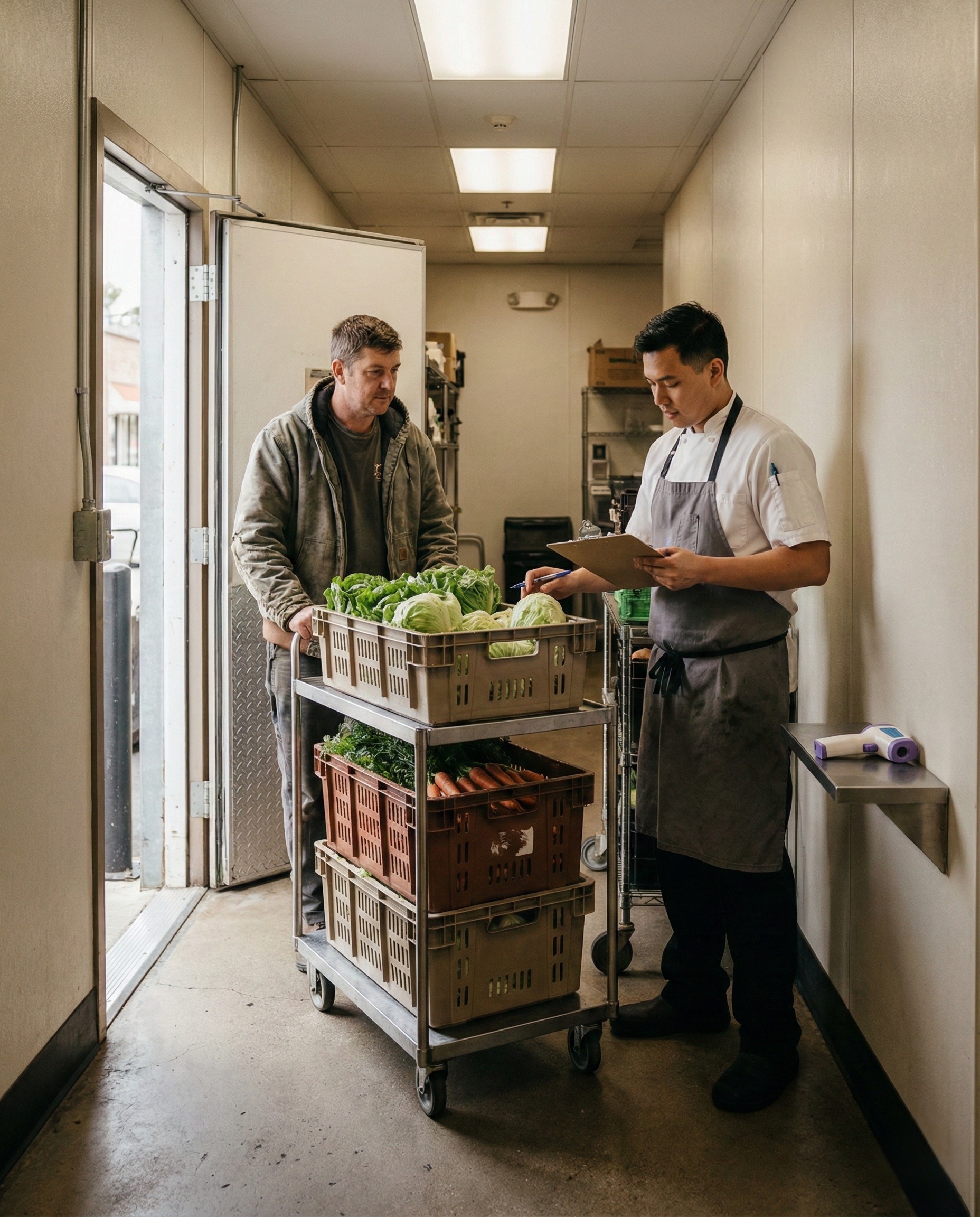
Many venues focus on temperatures, labels, and cleaning—rightly so—but underestimate the moment risk literally walks through the door: incoming goods. If receiving isn’t organized, the issue isn’t only “contamination” in a technical sense. It’s disorder. And disorder in the kitchen accelerates everything else: errors, waste, stress, and conflict.
The logic is simple, without turning this into a manual: define a consistent physical flow and teach it early. Where deliveries arrive, where the first checks happen, how you prevent “dirty” external packaging from moving into clean production zones, and how you separate spaces and steps so the team doesn’t improvise under pressure. The goal isn’t a perfect procedure on paper. It’s a procedure that fits your floor plan and your peak moments so people can actually follow it during real service conditions.
When a new person joins, full technical awareness develops over time. What works immediately is a small set of critical points taught in onboarding and reinforced consistently. Hand hygiene, work methods, and maintaining order during service can sound basic, until they aren’t happening.
The difference is how you frame them. If they’re presented as suggestions, they become optional. If they’re presented as house standards, they become culture. And culture reduces your reliance on one experienced person carrying the whole operation often the most fragile bottleneck in today’s staffing reality.
The most common mistake is treating self-control as a generic package that works everywhere. In reality, your plan works only if it speaks the language of your venue: your spaces, your volume, your strong days, your weak days, and your real workflows. And it works only if it’s revisited regularly onboarding for new hires and refresh sessions for everyone when menus change, layouts change, equipment changes, or the rhythm of work shifts.
The promise of a strong self-control program in 2026 is this: don’t expect every person to “know what to do” in every situation by instinct. Build a system that makes correct actions more likely even when things get busy.
With trained staff harder to find, food safety and workplace safety can’t be left to instinct or to the memory of a few senior people. They need simple, repeatable, teachable processes adapted to your venue and reinforced through onboarding and refresh training. Done well, this reduces risk and non-compliance, lowers daily stress, and makes service more stable.